Support for Thinning and Fragile Hair
Hair loss and restoration care services for traction alopecia, androgenetic alopecia, CCCA in Midlothian and Richmond
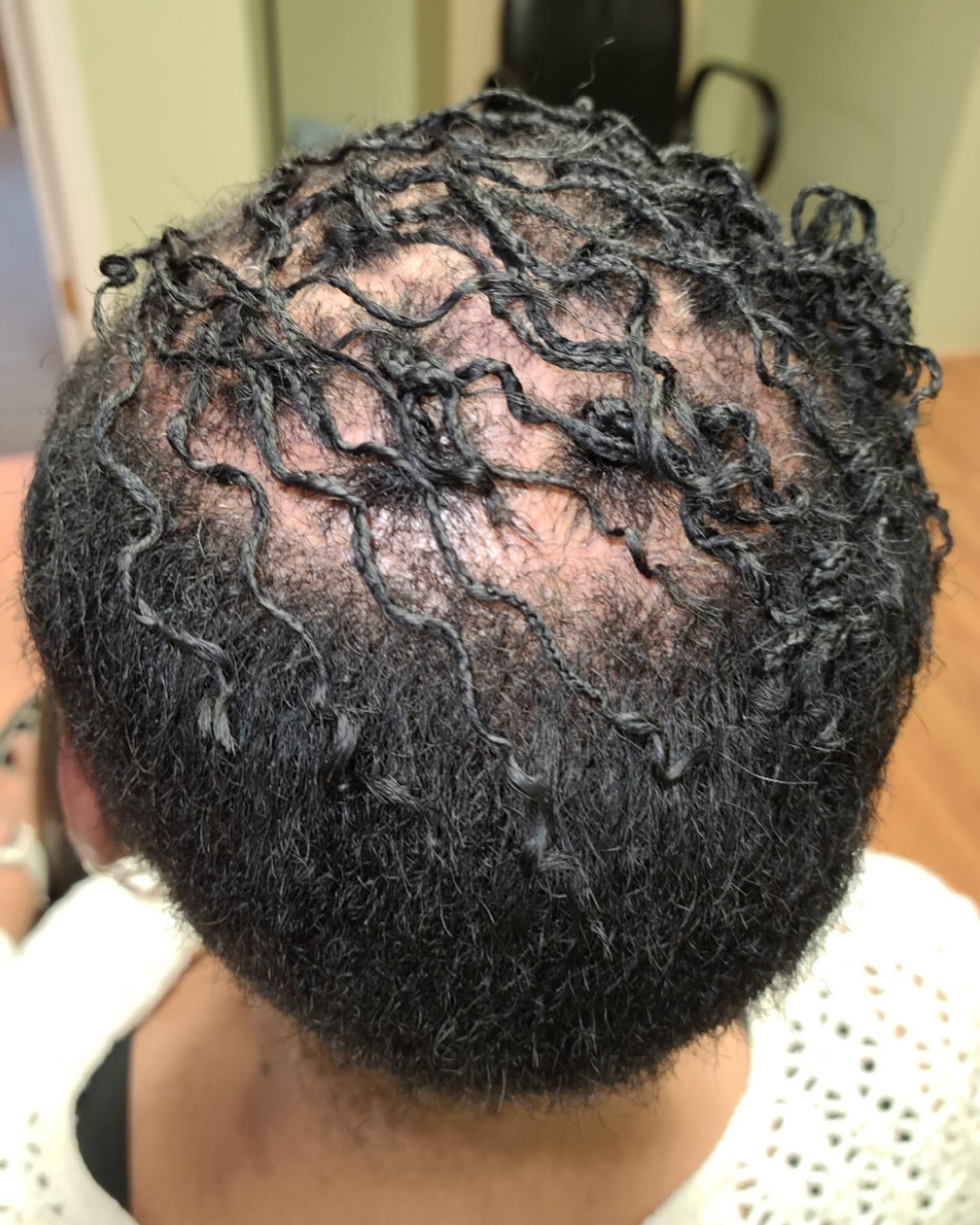
Thinning hair and traction alopecia in Midlothian or Richmond often result from years of tight hairstyles, chemical treatments, or neglecting scalp health. You may notice your edges pulling back, bald spots forming along your part, or sections of hair that feel weaker and break more easily than the rest.
B.A.D.-Braids And Dreds, Inc. offers hair loss and restoration care that includes gentle styling methods, strengthening treatments for fragile hair, and scalp stimulation techniques to encourage regrowth. Each service is part of a personalized care plan that addresses the root cause of your thinning and teaches you how to protect your hair moving forward. You will also receive education on protective styling that supports retention instead of causing further damage.
If you are dealing with these types of Alopecia, want to stop the damage while supporting regrowth, contact B.A.D.-Braids And Dreds, Inc. to schedule a consultation.
S.T.R.A.N.D Based Hair Loss Care Service – Midlothian or Richmond
Every hair loss service begins with a structured scalp and hair assessment grounded in the principles of S.T.R.A.N.D. (Stylists Training, Researching, and Networking with Dermatologists). We evaluate thinning patterns, scalp inflammation, density changes, tension history, and early indicators of follicle stress. Every service begins with the application of our NHR Dry Shampoo Growth Elixir.This is not a cosmetic dry shampoo. It is a scalp-focused therapeutic treatment designed to:
- Gently cleanse and break down buildup
- Support a balanced scalp microbiome
- Improve scalp environment for optimal follicle function
- Encourage circulation and reduce inflammatory stress
- Assist in maintaining hair strength while protecting fragile areas
Unlike traditional oil-heavy treatments that can overload the follicle, our elixir is lightweight, residue-free, and formulated to support both the scalp and the strand without clogging pores or creating additional stress on compromised follicles.
Healthy hair begins with a healthy scalp.We treat both.
Following your assessment and treatment, you will receive a personalized scalp and hair care protocol that outlines:
- At-home maintenance guidelines
- Product recommendations aligned with toxic-free standards
- Styling modifications to reduce tension
- Follow-up scheduling for monitoring progress
If at any point we observe signs consistent with medical or scarring alopecia, infection, or systemic-related hair loss, we will always refer you to a board-certified dermatologist. STRAND is built on collaboration — not ego. Early medical partnership protects your hair and your health.
This service is most effective when thinning is identified early, particularly in cases related to tension, inflammation, or product overload. Our goal is preservation, protection, and evidence-informed care — not false promises.
It helps to know what is actually happening
Clients in Midlothian or Richmond often ask whether their thinning is permanent, how long regrowth takes, and what they should stop doing to prevent further damage.
If you are located in Midlothian or Richmond and need hair loss care that focuses on strengthening fragile hair, reducing scalp tension, and supporting regrowth, B.A.D.-Braids And Dreds, Inc. offers personalized treatment plans designed to stop further damage and restore your hair health.